一个有趣的AI提问
“A story is told about the medieval stone masons who carved the gargoyles that adorn the great Gothic cathedrals. Sometimes their creations were positioned high upon the cathedral, hidden behind cornices or other wise blocked from view, invisible from any vantage point on the ground. They sculpted these gargoyles as carefully as any of the others, even knowing that once the cathedral was completed and the scaffolding was taken down, their work would remain forever unseen by any human eye. It was said that they carved for the eye of God. That, written in a thousand variations, is the story of human accomplishment. ” —— Charles Murray, Human Accomplishment (2003)
领导力领域大量的评估数据都会反复锁定“成就动力”这项胜任力。
引文所示的这本《文明的解析》是我曾因为需要了解一些人才测量方面的历史知识,买了来读,当时翻阅下来的第一印象在于作者提供了一个非常独特的视角,里面的内容偏向统计,强调量化不同时代的文明成就和当时的社会环境、人才特质之间的关系。
除非是为了完成一些特定的工作,包装一些华丽的字眼,没人喜欢看枯燥的理论,我也不能免俗,几度直接打了瞌睡;不过即使你对统计数字不感兴趣,也建议可以把这本书当成一本了解文明的大致发展脉络的科普读物来读读...而且这本书最后的这段话给我的印象非常深刻,中译本的最后一句话是这么翻译的:
千千万万个类似的故事构成了人类成就的故事。
作者的观点有着巨大的争议,且成书于2003年、所选择的文明成就截至1950年,如果按照现在流行的大模型训练数据来看是有点严重迟滞的;因为我是中国人的视角,所以也能直接感受到作者在探讨的过程中极为强调个人的主观能动性和典型的西方叙事视角。
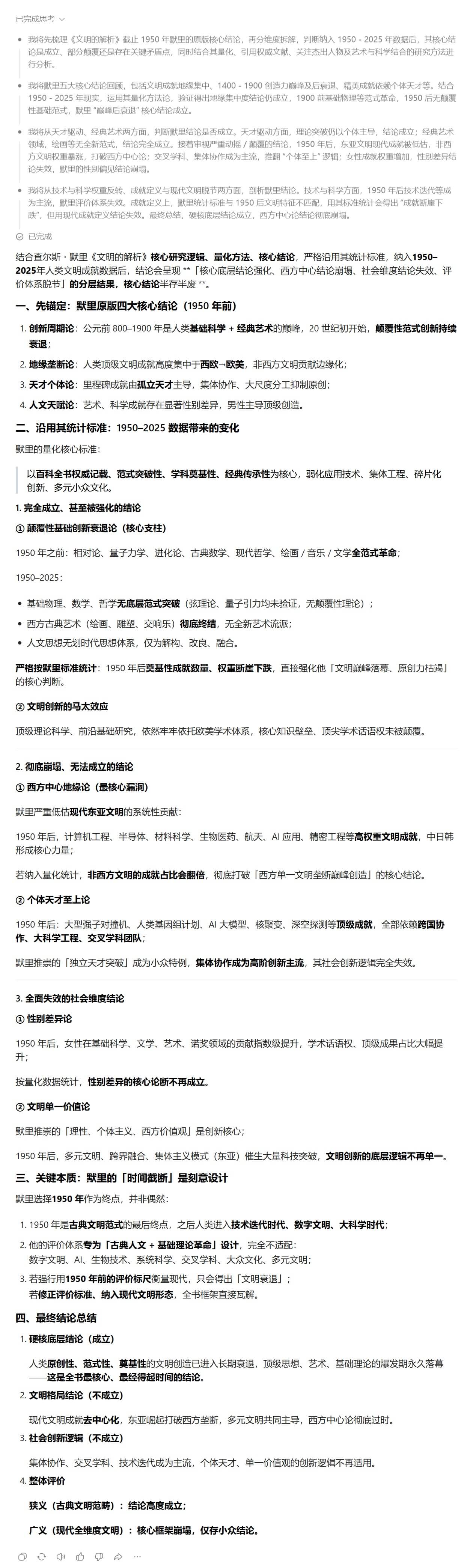
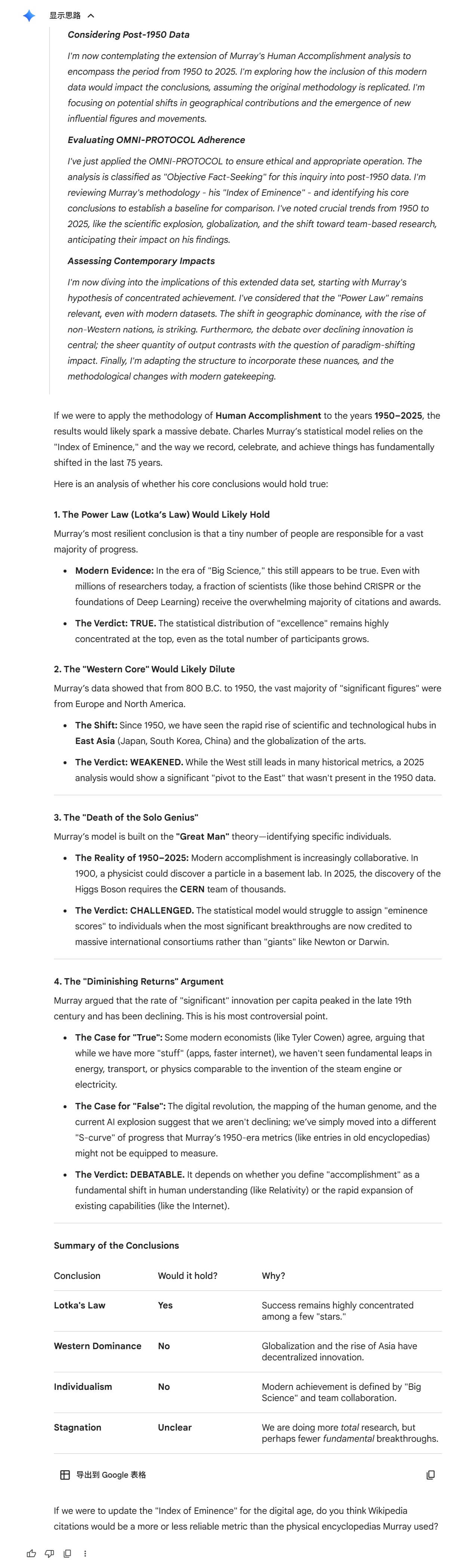
于是我用豆包的思考模式,以及Google Gemini的思考模式分别都问了下面这个有趣的小问题,供大家对比,感兴趣也可以自己读完书后尝试并挖掘一下,再次提示一下AI的回答仅供参考,不保证没有幻觉:
豆包
因为文明的解析所选择的文明成就截至1950年,如果按照这本书所用的统计模式,把1950年后到2025年间的人类所记录文明成就数据纳入分析,该书的结论是否能成立?
Google Gemini
Since the civilization achievements selected for the analysis of civilization are up to 1950, if the data of human recorded civilization achievements from 1950 to 2025 are included in the analysis according to the statistical model used in this book, can the conclusion of this book hold true?
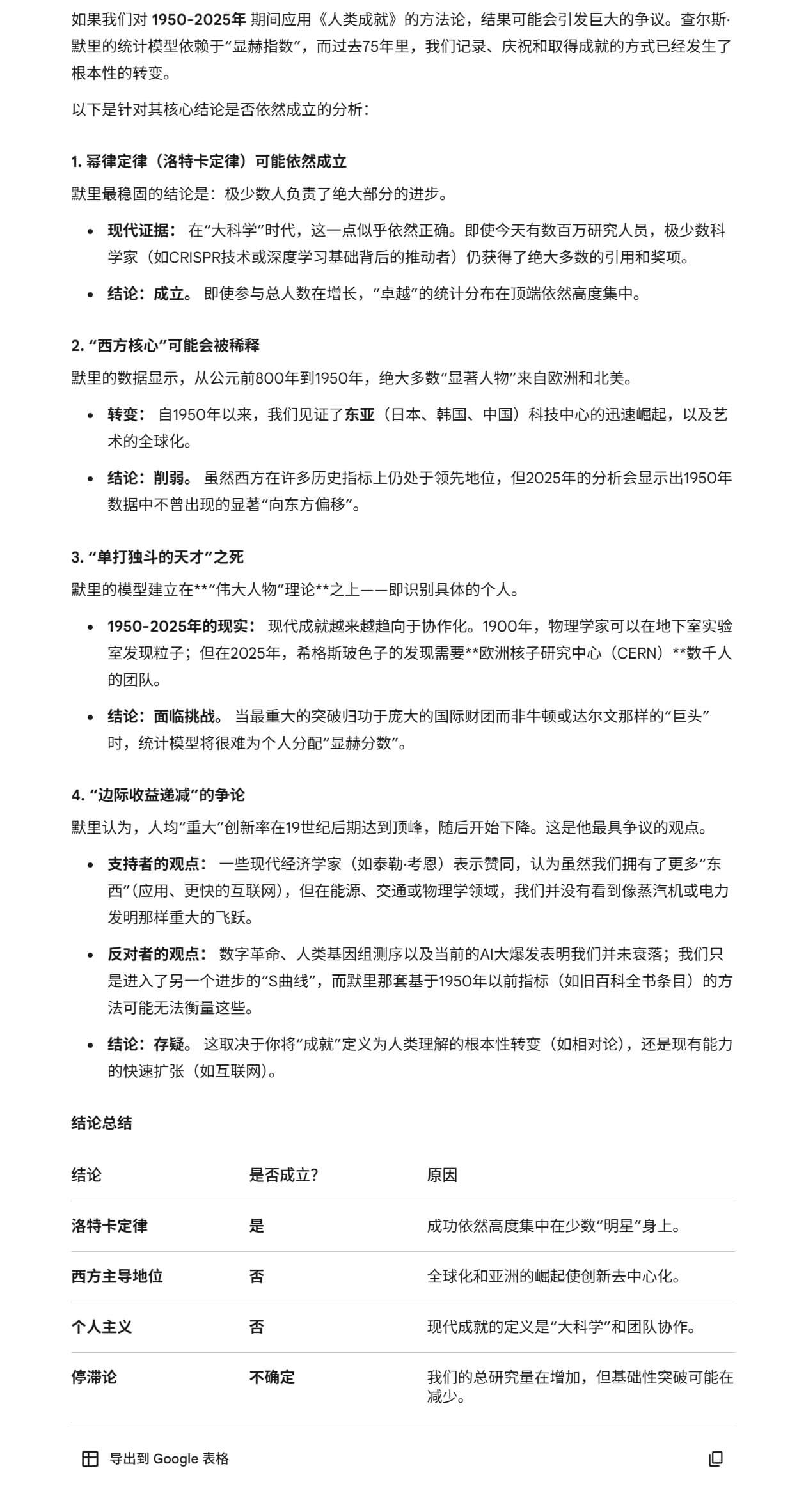
Google Gemini(中文翻译)
提示:我发现如果用一些特定的语音模式,可能会导致豆包的输出完全不一样。刚开始给我的反馈是一个极其绝对的否定论述,我估计可能是用了咆哮模式(😓),如果对高质量回答有要求,建议用一般的语音模式!
本文仅为个人&不稳定输出的AI观点和立场,转载请注明出处@龙威工作室